

Introduction
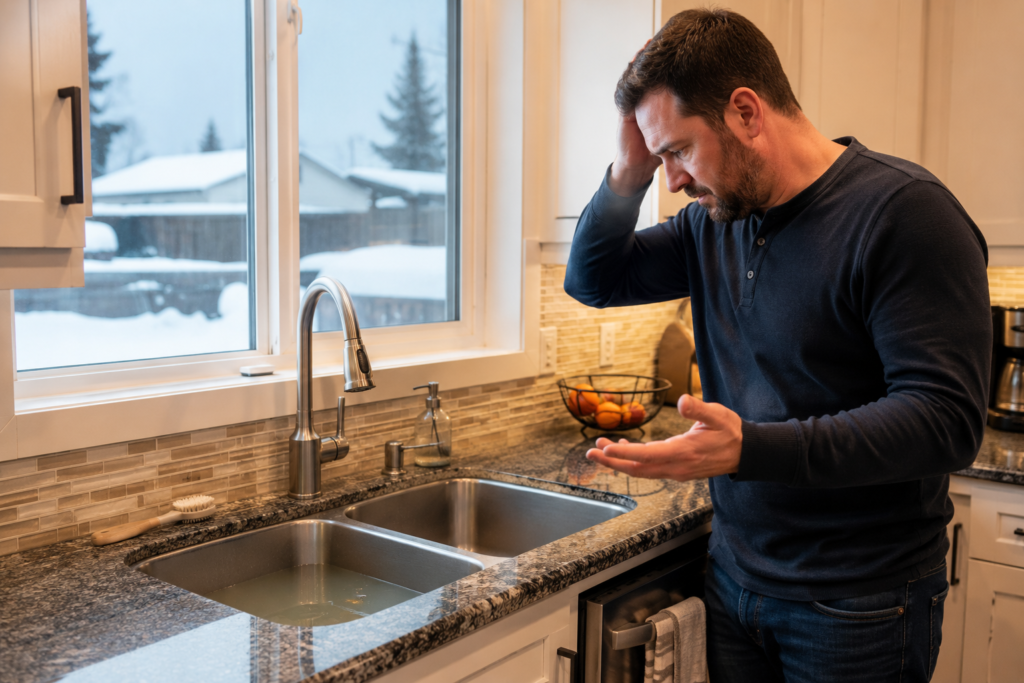
Most Calgary homeowners don’t think about their drains until something goes wrong. One morning the kitchen sink empties out fine, the next it’s sitting full of murky water while you’re trying to get the kids ready for school. Sound familiar? You’re far from alone. Calgary’s clay-heavy soil, hard mineral-rich water, and freeze-thaw cycle that hammers pipes every winter create conditions that are genuinely tough on residential plumbing. Add to that the grease and food debris that builds up in kitchen lines over years of cooking, and it’s easy to see why drain blockages are one of the most common calls plumbers get across the city from Beltline to Tuscany. The good news is that your plumbing almost always gives you early warning before things go seriously wrong. Knowing what those signals look, sound, and even smell like means you can act early, save money, and avoid the nightmare scenario of a backed-up sewer line flooding your basement. This guide walks you through every key warning sign, explains what’s happening inside your pipes, and helps you decide when to grab a plunger versus when to call a licensed drain specialist.
Why Drain Cleaning Matters More in Calgary Than You Might Think
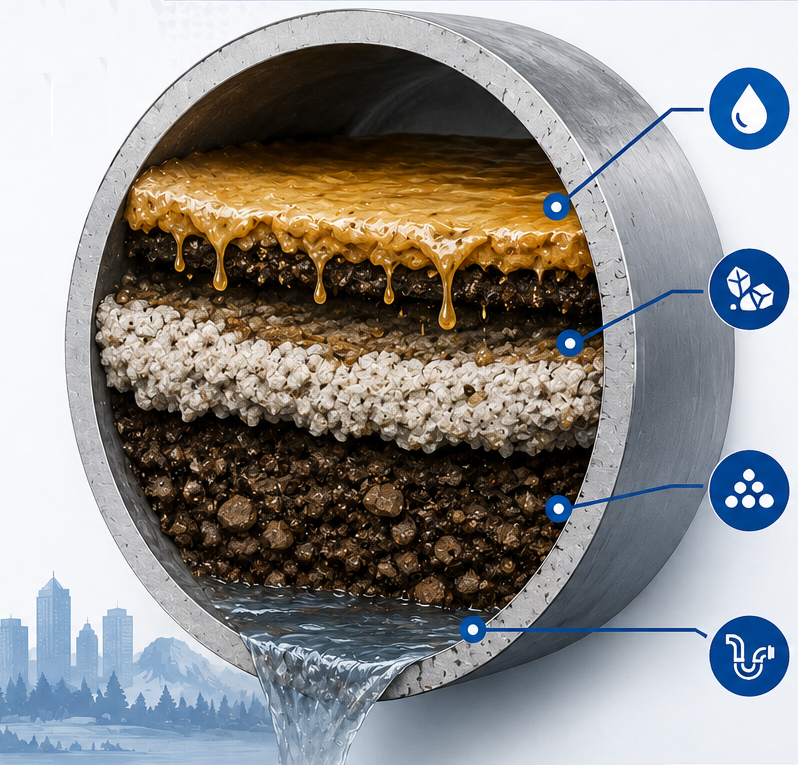
Before diving into the specific warning signs, it helps to understand what makes Calgary’s plumbing environment a little unique. The city sits on a layer of glacial till and clay-heavy soil that shifts significantly with seasonal temperature swings. Those shifts put lateral stress on underground pipes, which accelerates cracking and root intrusion over time. Calgary’s tap water also ranks among the hardest in major Canadian cities, with calcium and magnesium carbonate levels that steadily deposit mineral scale on the inside walls of drain pipes. Over months and years, that scale narrows the pipe’s internal diameter — sometimes cutting it nearly in half before any obvious slowdown appears at the tap. By the time you notice a problem, the buildup is often well past a simple fix. According to a report published by the City of Calgary Water Services division, sewer backups and blockages are the single most common infrastructure complaint received from residential homeowners in the city. That’s a meaningful statistic because it tells you this isn’t an edge case — it’s something the majority of households will face at some point. Catching the early signs dramatically changes the cost and complexity of the solution.
The 7 Warning Signs You Need Drain Cleaning Right Now
Let’s get into the actual signals your plumbing sends when it needs attention. Some of these are obvious once you know what to look for; others are subtle enough that many homeowners dismiss them for months before calling for help.
1. Water Is Draining Slower Than Usual
This is the most common and most ignored early warning sign. When water that normally disappears within seconds starts pooling in the sink or tub for 30 seconds, a minute, or longer, something is restricting flow inside the pipe. In a bathtub, it’s usually a combination of hair and soap scum that has accumulated around the stopper and down into the trap. In a kitchen sink, it’s almost always grease and food particles that have congealed on the pipe walls. A single slow drain typically points to a localized blockage — one that’s usually reachable and removable without too much trouble. The key word is ‘typically.’ If you ignore it, that partial obstruction collects more debris every day until the drain stops completely. At that point, what could have been a simple cleaning job may require professional hydro-jetting or even pipe inspection with a camera.
2. Foul or Sewage-Like Odours Coming from Drains
If you catch a whiff of rotten eggs, mildew, or outright sewage near your sink, shower, or floor drain, your nose is telling you something your eyes can’t see. Odours coming from drains fall into two main categories, and distinguishing between them matters. The first category is decomposing organic matter — food, grease, hair, and soap residue that has accumulated inside the drain and is breaking down. This produces a musty or sulphurous smell that’s unpleasant but typically indicates a clog you can deal with relatively quickly. The second category is sewer gas, which enters your home when a P-trap (the curved section of pipe beneath every drain) dries out or when there’s a crack in your drain line allowing gases to escape. Sewer gas contains hydrogen sulphide and methane, which beyond smelling terrible, can be a health and safety concern in enclosed spaces. If the smell appears occasionally and clears up after running water, a dried-out trap is the likely culprit — particularly in floor drains that don’t get used often. Persistent odours that don’t respond to flushing the drain with water almost always warrant a professional inspection.
3. Gurgling or Bubbling Sounds from Pipes
Drains aren’t supposed to make noise beyond the ordinary whoosh of water moving through a pipe. If you hear gurgling, bubbling, or a soft sucking sound when water drains — or even when you flush a toilet in a different part of the house — that’s air getting trapped and displaced by water trying to work its way past an obstruction or through a venting issue. Gurgling from multiple fixtures at the same time, for example the toilet bubbling when you drain the bathtub, is a more serious indicator. It suggests the blockage is further down the line, potentially in a shared drain or the main sewer line itself. At that stage, clearing it is no longer a DIY job. Hydro-jetting or professional auger service is typically the appropriate response.
4. Water Backing Up in Unexpected Places
This one genuinely alarms homeowners, and it should. When you run the washing machine and water backs up into your laundry tub, or you flush the toilet and water rises in your shower, you have what plumbers call a cross-system backup. Water is finding the path of least resistance, and that path is leading it somewhere it should never go.Cross-system backups almost invariably indicate a blockage in the main sewer line rather than an individual fixture drain. In Calgary, main line blockages can stem from tree root intrusion — a particularly common issue in established neighbourhoods like Mount Pleasant, Ramsay, or Inglewood where mature trees have had decades to send roots toward pipe joints — or from grease accumulation, collapsed sections, or debris from pipe deterioration.
Do not ignore this sign. A main sewer line backup that goes unaddressed can result in raw sewage entering your basement, which is not only a health hazard but also a costly remediation project. Contact a drain specialist as soon as this pattern appears.
5. Fruit Flies or Drain Flies Have Appeared
Tiny flies hovering near your kitchen sink or bathroom drain are not just an annoyance — they’re a biological indicator that organic matter has built up somewhere inside your pipes. Drain flies, which look like tiny fuzzy moths, lay their eggs in the gelatinous layer of grease, hair, and biofilm that coats the inside of slow or partially blocked drains. If you’re seeing them consistently, it’s because conditions inside your drain are ideal for their lifecycle. No amount of surface cleaning will resolve a drain fly problem if the underlying organic buildup remains inside the pipe. A thorough professional drain cleaning that breaks up and removes that layer is the only reliable solution.
6. Water Pooling Around Floor Drains or in the Basement
Basement floor drains in Calgary homes are often underappreciated until they fail. These drains are the last line of defence against water accumulation in your home’s lowest space, but they’re also susceptible to blockage from sediment, debris, and the gradual drying-out of the trap seal. If you notice standing water around a floor drain, or if your basement develops a persistent damp smell after rainfall or snowmelt, the floor drain deserves a close look. Calgary’s climate means the spring snowmelt season and summer thunderstorms are peak periods for drainage system stress. Homes in areas like the Elbow River corridor or neighborhoods with older combined storm and sanitary sewer systems are particularly vulnerable. Ensuring your interior floor drains are clear and functioning before spring arrives is a genuinely worthwhile preventive measure.
7. You Cannot Remember the Last Time Drains Were Cleaned
This is the most overlooked warning sign of all, because it’s not really a symptom — it’s an absence of maintenance. Plumbing professionals generally recommend annual drain cleaning for actively used household drains, and a professional main line inspection every two to three years for homes more than 20 years old. If you’ve lived in your Calgary home for five or ten years and have never had the drains professionally cleaned, the inside of your pipes almost certainly tells a story your clear-draining sink does not. Grease, mineral scale, and soap scum don’t disappear on their own — they compound. Scheduling a routine cleaning before problems appear is almost always less expensive and less disruptive than addressing an emergency.
DIY vs. Professional Drain Cleaning: When Each Approach Makes Sense
Not every drain problem requires a professional, but knowing the difference between a job you can handle yourself and one that needs expert equipment is important. Here is a practical breakdown.
Situation | Can You DIY? | Professional Needed? | Urgency Level |
| Urgency Level | Yes — plunger or drain snake | Optional | Low |
| Foul odour, trap dried out | Yes — pour water down drain | If persistent after flushing | Low-Medium |
| Foul odour, trap dried out | Attempt with caution | If persistent after flushing | Medium |
| Gurgling from multiple fixtures | No | Required | High |
| Backup into other fixtures | No | Required immediately | Very High |
| Sewage smell from multiple areas | No | Required immediately | Very High |
| Drain flies persisting after cleaning | Partial (surface only) | Required for pipe biofilm | Medium |
| Drain flies persisting after cleaning | No | Strongly recommended | Medium-High |
What Professional Drain Cleaning Actually Does for Your Home
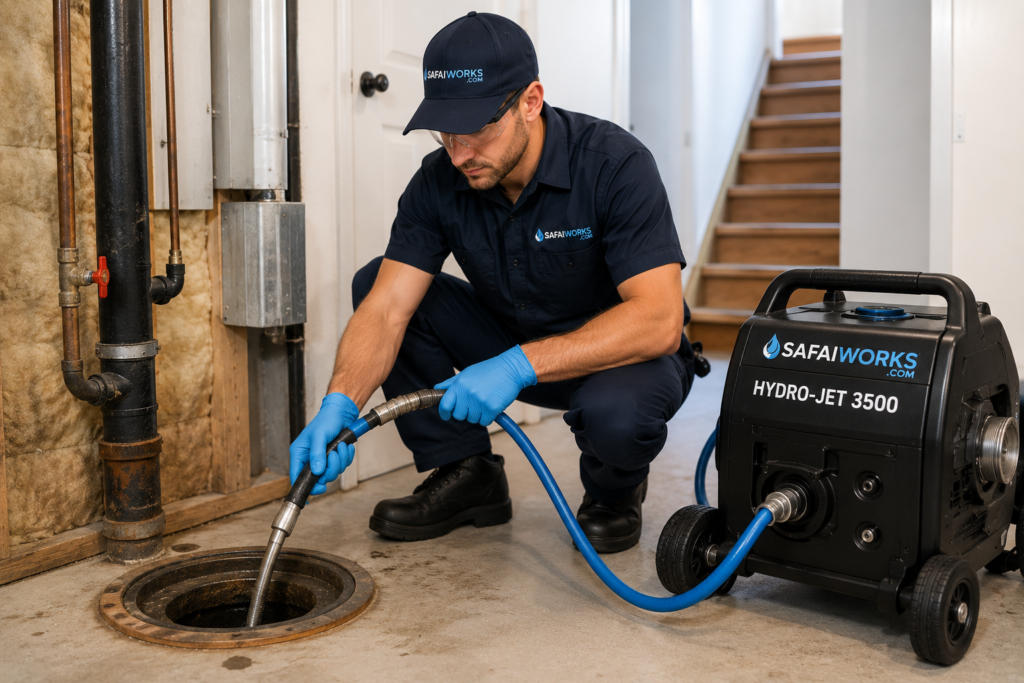
It Restores Full Flow Capacity
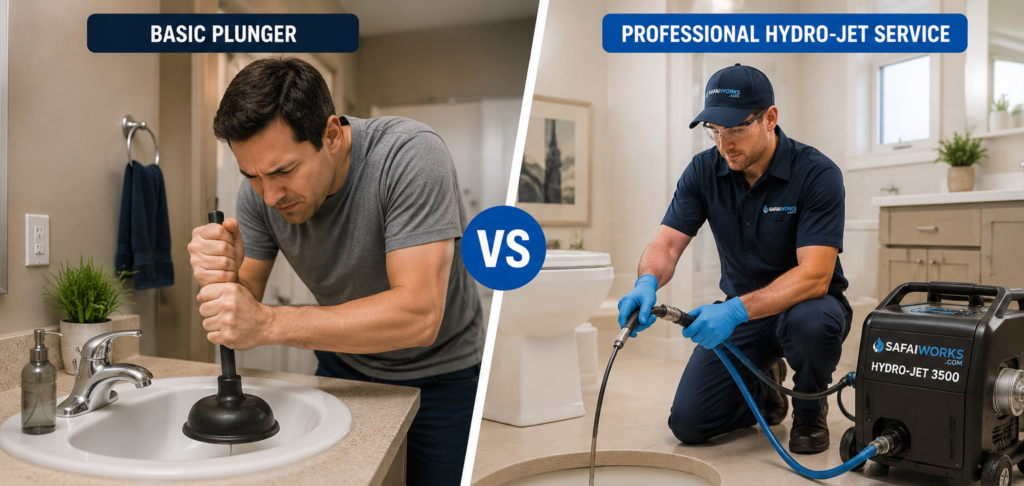
Hydro-jetting — the gold standard in professional drain cleaning — uses water pressurized to 4,000 PSI or more to blast away grease, mineral deposits, biofilm, and debris from the inside walls of the pipe. Unlike a drain snake, which punches a hole through a clog but leaves the pipe walls largely coated, hydro-jetting restores the pipe to something close to its original internal diameter. That means water flows the way it’s supposed to — freely and quickly.
It Eliminates Odour at the Source
Because professional cleaning removes the organic biofilm coating the inside of pipes rather than simply moving a clog further down the line, the bacterial source of those drain odours is eliminated. Many Calgary homeowners are surprised to find that persistent kitchen smells they’d attributed to other causes completely disappear after a thorough drain cleaning service.
It Extends the Life of Your Plumbing System
Grease and mineral scale that builds up inside older pipes creates pressure differentials and can accelerate corrosion in certain pipe materials. In Calgary homes built before the 1980s, which still represent a significant portion of the housing stock in inner-city neighbourhoods, cast iron or clay tile drains may already be managing some age-related deterioration. Regular cleaning reduces the additional stress that buildup places on those aging systems.
It Gives You a Diagnostic Window
Most reputable Calgary drains cleaning companies now offer camera inspection as either a standard part of the service or as an affordable add-on. A licensed technician threads a waterproof camera through the pipe after cleaning, giving you a real-time video view of the pipe’s internal condition. Cracks, root intrusion, pipe offsetting, and any remaining areas of concern are identified before they become emergencies. For older homes especially, this diagnostic information is genuinely valuable.
Common Mistakes Calgary Homeowners Make with Drain Problems
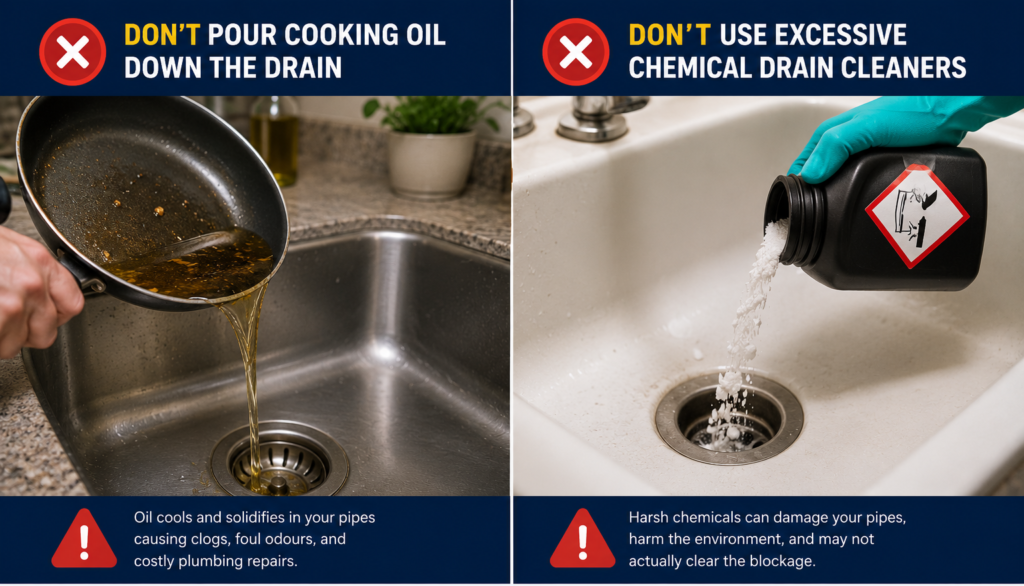
Relying Too Heavily on Chemical Drain Cleaners
Store-bought chemical drain cleaners — the foaming, caustic liquid or gel products that promise to dissolve clogs overnight — are genuinely effective at cutting through soft organic blockages like hair or grease, but they come with meaningful trade-offs. These products work through an exothermic reaction that generates significant heat inside the pipe. In older plastic pipes or PVC connections, repeated exposure can soften and weaken the material over time. In pipes that are already cracked or compromised, the chemicals can work their way into the surrounding soil. More practically, chemical cleaners often dissolve enough of a clog to restore partial flow without actually clearing the blockage. You get a temporary improvement, the clog re-forms from the remaining material within weeks, and the cycle repeats — each time with a little more chemical exposure accumulating in your pipes.
Ignoring a Single Slow Drain for Too Long
The psychology behind this is completely understandable. The drain is slow, not stopped. Life is busy. It’s easy to tell yourself you’ll deal with it next weekend, and then next weekend comes and goes. The problem is that partial blockages are actively accumulating additional debris every day the water runs. A drain that’s 60% blocked in January may be 90% blocked by March and completely stopped by April — often at the most inconvenient possible moment.
Assuming All Drain Problems Are the Same
Using a plunger on a partial grease clog in a kitchen sink is perfectly reasonable. Using that same approach on a system-wide blockage in the main sewer line, or on a drain that has a tree root intrusion, won’t help and may make things worse by driving a partial obstruction further into a more difficult-to-reach section of pipe. Matching the right tool and approach to the actual problem is what separates a quick fix from a compounded headache.
Not Scheduling Preventive Maintenance
Most Calgary homeowners would never skip annual furnace maintenance before winter — the stakes are too obvious. Drain maintenance deserves the same logic. A $150 to $250 annual drain cleaning appointment is substantially less expensive than the $800 to $3,000+ cost of addressing a main line blockage, sewer backup remediation, or emergency call-out. Preventive maintenance is genuinely cost-effective when you look at the numbers honestly.
Conclusion: Don’t Wait for a Plumbing Emergency to Act

Your drains are one of those home systems that really do work better when you give them a little attention before they demand it. Calgary’s specific conditions — the hard water, the clay soil, the temperature extremes, and the aging housing stock in many desirable neighborhoods — mean that drain maintenance isn’t something to file away as optional. It’s genuinely practical protection for your property and your wallet. The warning signs we’ve covered in this article — slow drainage, persistent Oduors, gurgling sounds, unexpected backups, drain flies, water around floor drains, and simply not remembering when you last had service — are your plumbing system’s way of communicating with you. The earlier you respond to them, the simpler and less expensive the solution is going to be. Whether you’re dealing with a stubborn kitchen sink that’s been draining slowly since Christmas or you’re simply being proactive about a Calgary home you plan to live in for years to come, the investment in a professional drain cleaning service is one of the most cost-effective maintenance decisions you can make.
Ready to Clear Your Drains the Right Way?
Don’t wait for a clog to turn into a crisis. Our licensed Calgary drain specialists are ready to assess, clean, and protect your plumbing system — with upfront pricing and camera inspection available.
Call Safai Works Today or Book Online at safaiworks.com Serving all Calgary communities | Licensed & Insured | Same-Day Appointments Available
Leave a Reply